Field guide Guides 10 min
Greenhouse Summer Cooling: Shade Cloth and Ventilation
Unventilated greenhouses kill summer crops. Shade cloth percentages, fan sizing, and evaporative cooling techniques to keep temperatures in the growing range.
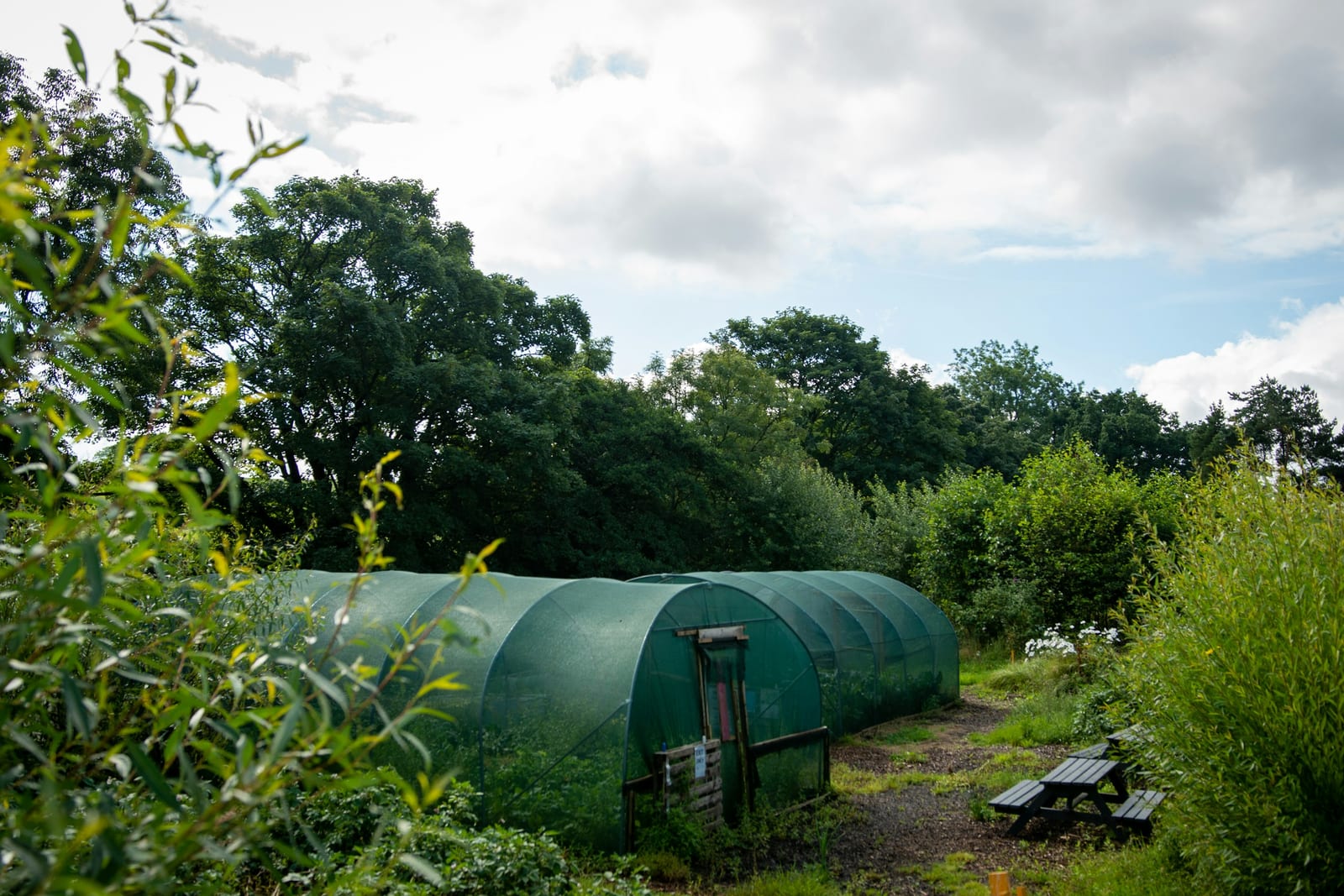
The first line of defense against summer overheating is ventilation: exhaust fans that move hot air out before it accumulates. The second is shade cloth at 30 to 50 percent depending on climate and crops. In low-humidity regions, an evaporative cooling system adds significant cooling capacity at a fraction of the cost of air conditioning.
None of these tools is complicated. The failure mode is not installing them at all, or installing them too late, after the first major heat event kills a crop.
Why greenhouses overheat faster than you expect
A greenhouse is engineered to trap solar energy. The glazing transmits shortwave radiation from the sun, which is absorbed by plants, soil, and structure. That energy re-radiates as longwave infrared radiation, which the glazing does not transmit as easily. The result is the greenhouse effect: heat accumulates inside faster than it escapes.
On a clear 85°F summer day, the interior of an unventilated plastic greenhouse can reach 120°F or higher within an hour of sunrise. Polycarbonate panel greenhouses tend to stay somewhat cooler than single-layer plastic because the insulating air layer between panels reduces conductive heat transfer, but the solar gain mechanism is the same for all glazing types.
The rate of temperature increase depends on:
- Glazing area. More glass or polycarbonate = more solar gain.
- Volume. Smaller greenhouses heat faster because there is less air mass to absorb heat before temperatures rise.
- Ventilation. Without any vent or fan, no cooling occurs. With a large ridge vent open, passive convection begins immediately.
- Site exposure. A greenhouse in full sun with no shade trees builds heat faster than one with afternoon shade from nearby vegetation.
This is the mirror image of the winter problem. The same glazing that holds heat in January bakes the interior in July if nothing moves that heat out.
Ventilation: the first and fastest fix
Before adding shade cloth or evaporative cooling, confirm that ventilation is adequate for the season. In summer, the goal is to match or exceed the rate at which solar gain adds heat, which requires substantially more airflow than winter.
The full sizing math for vent area and fan capacity is in the greenhouse ventilation guide. The short version: in summer, a greenhouse needs far more active ventilation than in spring or fall, and passive ridge vents alone are rarely sufficient at peak midday temperatures in warm climates.
For a greenhouse with no power run to it at all, the ceiling on passive cooling is a ridge vent paired with low side vents: hot air escapes out the top by natural convection while cooler replacement air is pulled in low, and exterior shade cloth cuts the solar heat load before it ever becomes warm air that needs venting. That combination holds up fine in mild climates. It runs out of capacity during an extended heat wave in a hot zone, which is the point at which a powered exhaust fan stops being optional.
Practical steps before adding other cooling:
- Open all vents and doors fully in the morning before temperatures rise.
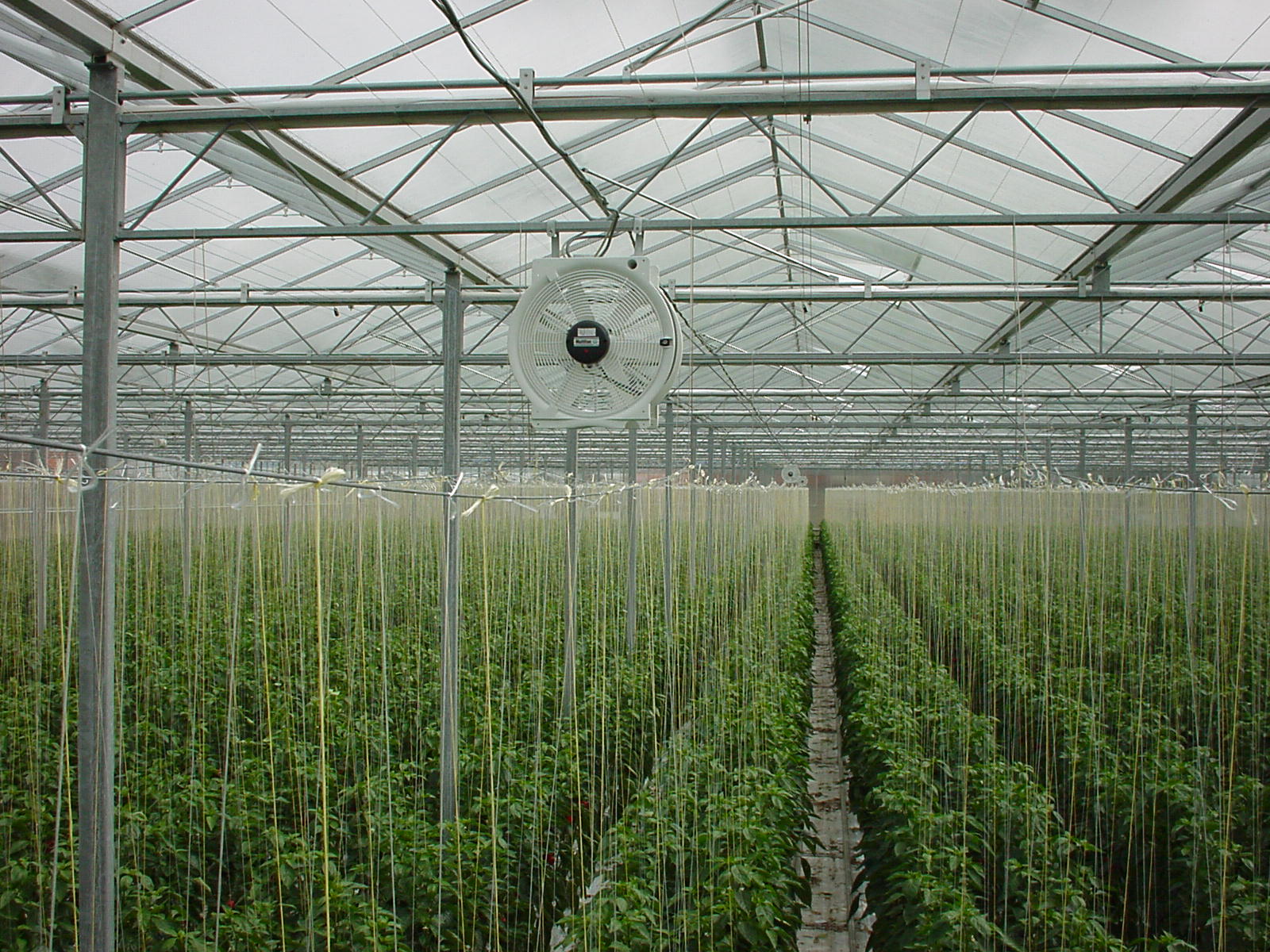
- If temperatures continue climbing above the target range, that is the signal that passive ventilation is undersized and a powered exhaust fan is needed. A shutter exhaust fan with built-in thermostat pulls hot air out the end wall and switches itself on before the interior overshoots.
- Exhaust fans should be sized to exchange the greenhouse air volume at least once per minute in summer, faster than the once-per-two-minutes rate adequate for milder weather.
- The greenhouse electrical guide covers wiring for exhaust fans, which require a dedicated outdoor-rated circuit with GFCI protection.
Ventilation is the first fix because it addresses the root cause: heat accumulation. Shade cloth and evaporative cooling reduce the rate of heat input, but they do not replace the need to remove hot air.
Shade cloth: picking the right percentage
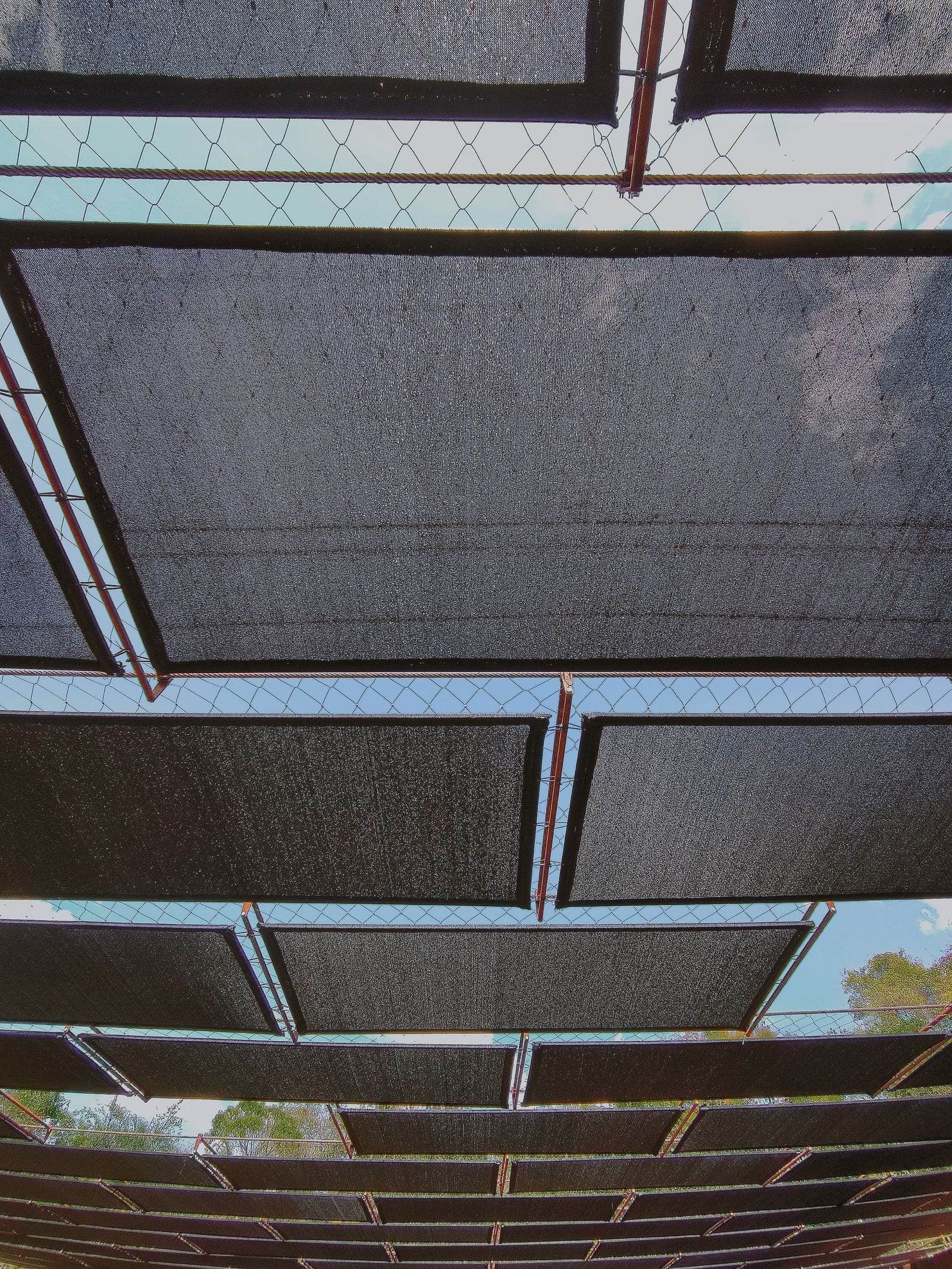
Shade cloth is rated by the percentage of light it blocks. A 40% cloth blocks 40% of incoming radiation; a 60% cloth blocks 60%. Higher shade percentages mean lower temperatures inside the greenhouse but also less light available for plant growth, so matching the percentage to the crop and climate matters.
Shade cloth belongs on the outside of the glazing, not inside. External cloth intercepts sunlight before it enters the structure and converts to heat. Internal cloth allows the heat to accumulate inside the glazing first, then blocks some of it from reaching the plants, but the heat is already in the greenhouse.
Shade percentages by climate and crop:
| Shade cloth % | Best for | Notes |
|---|---|---|
| 30% | Northern climates (zones 4–6) / cool-season crops | Reduces sunscald on tomatoes, peppers, eggplant during heat waves; lets maximum light through |
| 40% | Most of the United States / most vegetable crops | Standard choice for mixed-crop greenhouses during peak summer; recommended for lettuce and tomatoes in most regions during heat waves exceeding 95°F |
| 50% | Desert climates / zone 10 and hotter | Most vegetable crops throughout summer; necessary when outdoor temps regularly exceed 100°F |
| 60–90% | Shade-loving plants: orchids, ferns, hostas | Not appropriate for food crops, which need active photosynthesis |
The crop most affected by shade cloth choice is lettuce. Clemson Extension confirms that lettuce grows optimally at 55 to 65°F and becomes bitter above 75°F. In most summer greenhouses without shade cloth, lettuce is not viable at all. With 40% shade cloth plus adequate ventilation, summer lettuce production is possible in northern and moderate climates, though production slows significantly compared to spring and fall.
Tomatoes perform differently. Clemson Extension cites their optimal growing range as 70 to 80°F during the day, which a summer greenhouse can provide with 30% shade cloth and ventilation. Tomatoes tolerate more heat than lettuce, making them the natural summer greenhouse crop in most regions.
Practical installation notes:
- Cut shade cloth to overlap the greenhouse by at least 6 inches on each side to prevent heat from entering around the edges.
- White or aluminum-colored shade cloth reflects more radiation than black; black absorbs more and gets hot. For greenhouses, aluminized or white cloth performs better than black in most applications. Aluminet reflective shade cloth is the reflective option most growers reach for at the 40 to 50 percent range.
- Remove shade cloth in fall when light levels drop and you shift to winter crops. The same cloth that saves your tomatoes in July will stunt your spinach in October.
Evaporative cooling: effective in dry climates, limited in humid ones
Evaporative cooling works by forcing warm air through wet pads or misting nozzles. As water evaporates, it absorbs heat from the air, lowering the temperature of the air that reaches the plants. The cooling effect depends entirely on the humidity of the incoming air.
Alabama Cooperative Extension tested fan-and-pad systems at a greenhouse in Mobile, Alabama (a high-humidity coastal climate). The findings: during afternoon hours from 11am to 3pm in July, the system reduced inlet air temperature by more than 5°F during 64% of the measured hours. Once that air travels through the greenhouse, it can pick up another 8 to 9°F of heat before it exits. The conclusion: in humid climates, evaporative cooling provides modest relief but does not replace shade cloth and ventilation as the primary tools.
In low-humidity climates (the southwestern US, Great Plains, and high-altitude Rocky Mountain regions), the same equipment achieves dramatically larger temperature drops because the incoming air has much greater capacity to absorb moisture. Greenhouse growers in Arizona and New Mexico report routine 15 to 25°F temperature reductions from fan-and-pad systems during dry summer heat, which can keep a greenhouse in the productive range even on triple-digit days.
The three forms of evaporative cooling:
- Fan-and-pad systems: Evaporative pads mounted on one wall, exhaust fans on the opposite wall. The fans pull air through the pads, which are continuously wetted by a recirculating pump. This is the most effective and most expensive option (Alabama Cooperative Extension cites $1,800–$2,000 for equipment on a 30 × 96-foot greenhouse). Best for permanently installed, year-round greenhouse operations.
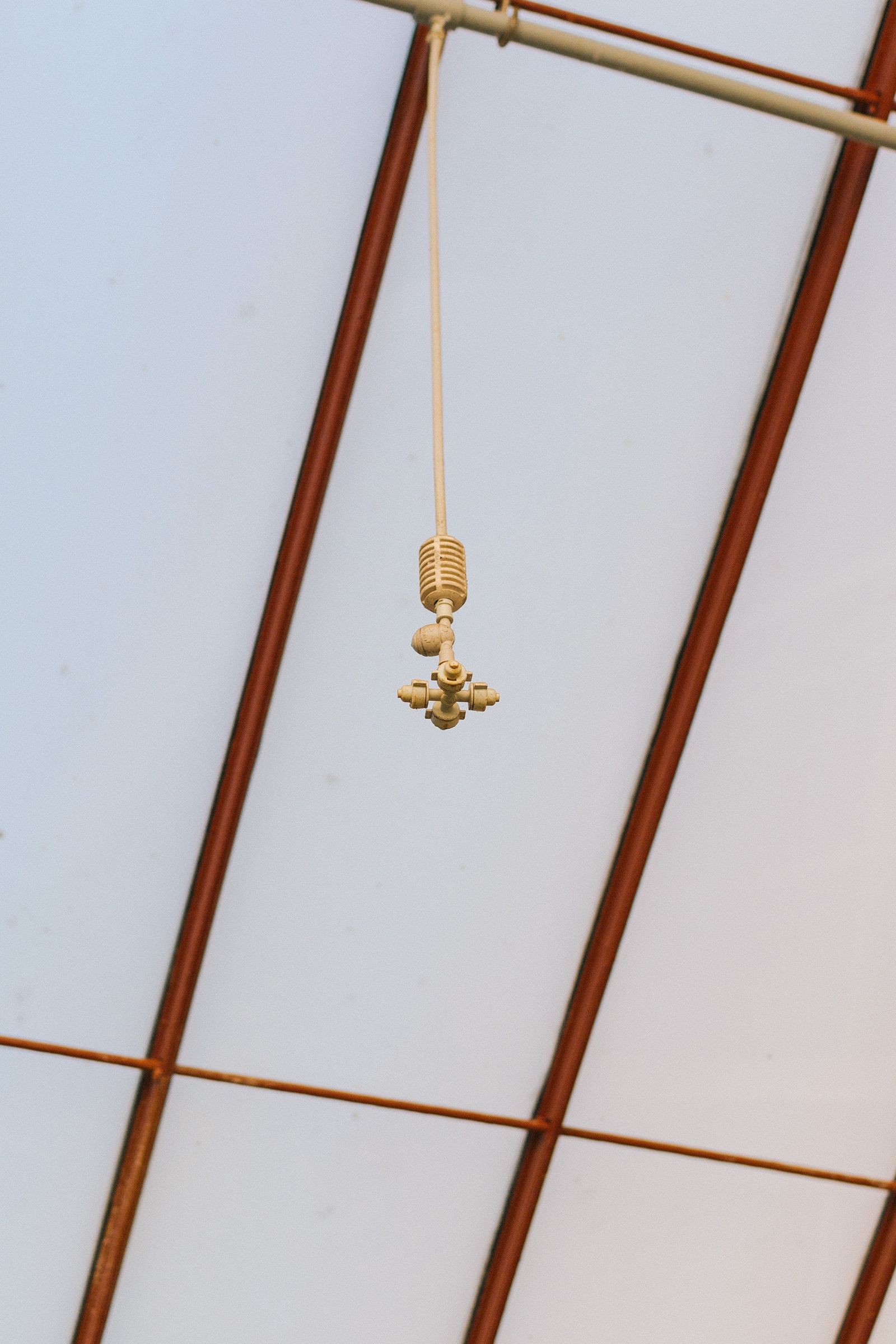
- Misting nozzles: High-pressure nozzles mounted overhead that emit a fine water mist into the air. Lower installation cost than pad systems, but the mist wets foliage directly, which can promote fungal disease. Best for outdoor propagation areas or crops that tolerate wet conditions.
- Evaporative swamp coolers: Portable units that pull air through a wet pad using an internal fan. Available for $200–$600 at hardware stores, suitable for small greenhouses. Less effective than dedicated pad systems but easier to install and remove seasonally.
Crop temperature limits: what stops growing first
Summer cooling is not about achieving perfect temperature control. It is about keeping temperatures below the threshold where your most temperature-sensitive crop stops growing or suffers damage. Knowing that threshold prevents cooling expenses beyond what the crop actually requires.
Lettuce has the lowest heat tolerance of common greenhouse crops. Clemson Extension puts the optimal range at 55 to 65°F. Above 75°F, flavor deteriorates and plants begin to bolt. Lettuce seed will not germinate above 95°F. In most summer greenhouses without supplemental cooling, lettuce is simply not a viable crop from June through September. Even with shade cloth and ventilation, maintaining below 75°F consistently in a summer greenhouse is difficult in warm climates.
Peppers tolerate more heat than lettuce but are sensitive in a different way. University of Minnesota Extension research found that daytime temperatures above 90°F cause blossom drop: the plant drops its flowers before fruit can set, which effectively halts production. Night temperatures above 70°F have a similar effect. A greenhouse that stays below 90°F at peak afternoon has viable pepper production; one that regularly reaches 95 to 100°F will have vigorous plants that set little or no fruit.
Tomatoes sit in the middle. Clemson Extension data puts optimal daytime temperature at 70 to 80°F. Above that range, growth continues but blossom set becomes erratic as temperatures climb. Tomatoes are still the most practical summer greenhouse crop in most climates because their heat tolerance gives more margin for an imperfect cooling setup.
Heat-tolerant crops for summer greenhouse production when cooling capacity is limited: basil, eggplant, melons, okra, Armenian cucumber, and sweet potato. These crops perform well above 80°F and are worth growing during the hottest months when cool-season crops are not viable.
Combining approaches for the hottest climates
In USDA hardiness zones 9 through 11, or in any location where outdoor summer temperatures routinely exceed 95°F, a single cooling method is rarely sufficient. The effective summer cooling stack:
- Exterior shade cloth at 40–50%. Reduces incoming solar heat load before it enters the structure.
- Active exhaust ventilation. Runs on a thermostat, activating before peak temperatures are reached (typically set to turn on at 80 to 85°F to pull air through before the target range is exceeded).
- Evaporative cooling in low-humidity regions. Fan-and-pad or swamp cooler adds meaningful temperature reduction when outdoor humidity is below 60%.
- Crop selection. Grow only heat-tolerant crops in the greenhouse during the hottest months; shift cool-season crops outdoors under shade or into a storage cooler for regermination in late summer.
The greenhouse site selection guide covers the wind exposure and orientation factors that affect how hot a greenhouse gets before any cooling is applied. A greenhouse in a wind-exposed location with good natural airflow needs less active cooling than one in a sheltered spot. The winter growing guide covers the cool-season crops that take over the greenhouse when summer heat shuts down lettuce and spinach production.
Summer management is the part of greenhouse ownership that the name of this site is not directly about. But keeping a greenhouse functional through July and August is how it earns its foundation cost across twelve months instead of eight. The tools are not complicated: shade cloth for heat reduction, exhaust fans for heat removal, evaporative cooling where the climate supports it, and crop selection that matches the season. Work with summer’s heat rather than against it, and the greenhouse stays productive on both ends of the calendar.
Accessories worth buying on day one
The cooling stack comes together from a handful of parts that automate the heat response so a single bad afternoon does not cook the crop.
- Inkbird ITC-308 temperature controller: switches an exhaust fan on at a set threshold so cooling starts before the interior reaches the critical temperature.
- Bayliss MK7 automatic vent opener: a wax-cylinder opener that cracks a roof vent on sunny days with no power, the passive backstop to powered ventilation.
- VIVOSUN AeroWave clip-on fan: keeps air moving to even out hot spots and reduce the stagnant, humid pockets where mildew sets in.
As an Amazon Associate, Defy Frost earns from qualifying purchases.