Field test Reviews 9 min
Janssens Royal Victorian Review: The Glass Estate Kit
Janssens Royal Victorian reviewed: 2026 lineup from $8,799 to $18,999, heating cost analysis, honest drawbacks, and who should buy glass over polycarbonate.
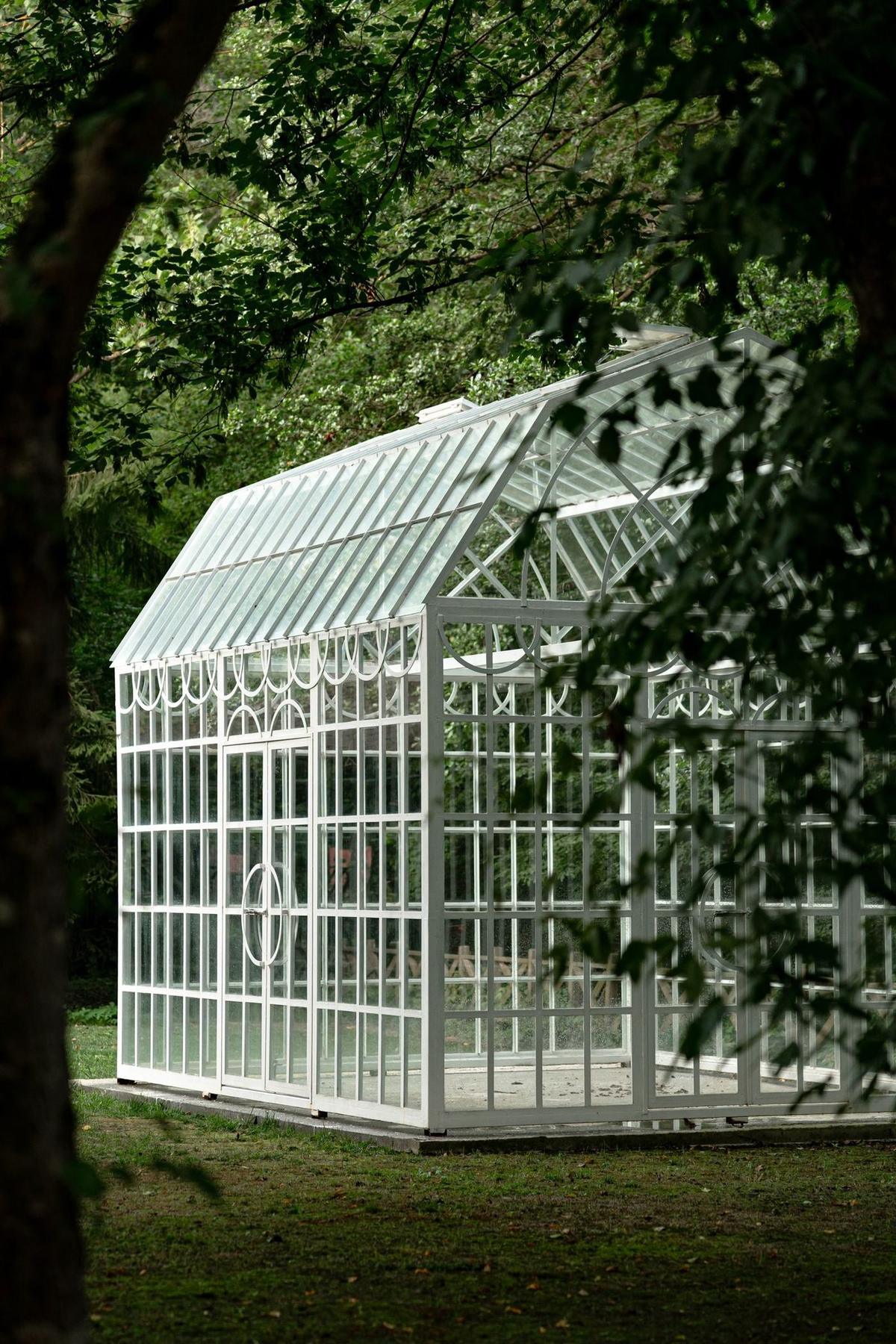
The Janssens Royal Victorian delivers estate-grade glass construction: 4mm tempered glazing, 17-gauge aluminum framing, and automatic roof vent openers included as standard. Prices run $8,799 to $18,999 for the full model lineup. It’s the right greenhouse if you want glass, plan a permanent install, and can absorb the higher heating bill that single-pane glass brings. It’s the wrong choice if winter thermal performance is the priority, if you want to move it later, or if you’re comparing dollar-for-dollar growing space.
The Belgian design house behind this line is Janssens, imported to North America through Exaco, the same distributor that brings in the Riga and Riga XL polycarbonate kits. That distribution relationship matters: parts exist, service contacts respond, and the import pipeline is established rather than speculative. A greenhouse at this price point should come with real support, and the Janssens line generally delivers it.
The full lineup, verified June 2026
Three Royal Victorian product families, all priced directly from Exaco’s product pages in June 2026.
Royal Victorian (full glass: 4mm tempered walls and roof, 17-gauge aluminum, Black or Fir Green):
| Model | Footprint | Floor area | Sidewall | Peak | Doors / vents | Price |
|---|---|---|---|---|---|---|
| VI 23 | 10’2” x 7’9” | 79 sq ft | 6’7” | 8’6” | 1 sliding, 2 roof | $9,799 |
| VI 34 | 15’ x 10’2” | 150 sq ft | 6’7” | 9’0” | 2 sliding, 3 roof | $11,499 |
| VI 36 | 19’11” x 10’2” | 200 sq ft | 6’7” | 9’0” | 2 sliding, 4 roof | $14,499 |
| VI 46 | 19’11” x 12’7” | 250 sq ft | 6’7” | 9’2” | 2 sliding, 6 roof | $18,999 |
Royal Victorian Hybrid (glass walls + 10mm solar-control polycarbonate roof):
| Model | Footprint | Floor area | Price |
|---|---|---|---|
| VI 34 | 15’ x 10’2” | 150 sq ft | $14,999 |
| VI 36 | 19’11” x 10’2” | 200 sq ft | $17,999 |
| VI 46 | 19’11” x 12’7” | 250 sq ft | $19,999 |
Junior Victorian (lower 5’2” sidewalls, 38-degree pitch, same glazing spec):
| Model | Footprint | Floor area | Price |
|---|---|---|---|
| JV 23 | 10’2” x 7’9” | 79 sq ft | $8,799 |
| JV 24 | 12’6” x 7’9” | 96 sq ft | $9,599 |
| JV 25 | 15’ x 7’9” | 116 sq ft | $10,249 |
The T-shaped Royal Orangerie sits above all of them at $22,999 for a 12’10” x 15’7” footprint (185 sq ft), four roof vents, two louvre windows, and the same 4mm tempered construction.
Every model in the Royal Victorian family ships with the same standard feature set: automatic roof vent openers, a misting system, louvre window covers, gutters, and a downspout. Nothing significant costs extra at the base price, which puts the sticker in honest context. At $11,499 for the VI 34, you are not buying a stripped kit that needs upsell accessories to function.

Glass or polycarbonate: what the choice actually costs you
The Royal Victorian is a glass greenhouse. That sentence drives every operational decision that follows.
Light quality is where glass wins, and decisively. 4mm tempered glass transmits roughly 90% of available sunlight, with directional beam light intact. Standard 10mm twin-wall polycarbonate transmits 70 to 80%, and the light is diffused rather than directional. For orchids, cacti, citrus trees, and any crop that wants direct-beam sun, glass is the superior growing environment. For most vegetables and herbs, diffused polycarbonate light does the job equally well.
Heat retention is where polycarbonate wins, and just as decisively. The 4mm single-pane glass used in the Royal Victorian has a thermal resistance of roughly R-1.0. The 8mm twin-wall polycarbonate in the standard Exaco Riga runs R-1.6 to R-1.8; the 10mm version runs R-1.8 to R-2.0. That gap compounds every cold night. A glass greenhouse working to hold 45°F on a 10°F night is doing so with a heater running materially harder than one serving the same temperature in a twin-wall structure.
Here is that difference in heater sizing terms. This table estimates minimum BTU requirements for the VI 46 (250 sq ft, the largest Royal Victorian), calculated from total glazing surface area, 4mm glass at R-1.0, and a 20% safety margin:
| Outside temp | Target inside | Temp difference | Approx BTU/hr needed (VI 46) |
|---|---|---|---|
| 20°F | 45°F | 25°F | ~22,000 BTU/hr |
| 10°F | 45°F | 35°F | ~31,000 BTU/hr |
| -10°F | 45°F | 55°F | ~48,000 BTU/hr |
The VI 34 (150 sq ft) runs roughly 60% of those figures. The cheap greenhouse heating guide covers heater selection in detail. What matters here is the order of magnitude: a glass greenhouse in zone 5 or colder is going to run a serious heater. A Bio Green Palma greenhouse heater suits the smaller VI 23 and VI 34, but the VI 46 in deep cold will want something larger. Plan that cost before committing to the kit.
The Royal Victorian Hybrid addresses this directly by swapping the glass roof for 10mm solar-control polycarbonate. The roof is where a disproportionate share of overnight heat escapes, because warm air rises and exits through the apex, and the same panel cuts direct-beam solar heat gain in summer, so the swap works both ends of the season. The Hybrid costs $3,500 to $5,000 more per model than the all-glass version, but that upfront difference can recover in heating savings over several winters depending on the climate.

What the frame spec means in practice
The 17-gauge aluminum framing is lighter than the 13-gauge aluminum in the Exaco Riga, but the Victorian roof geometry compensates for the gauge difference. The Royal Victorian uses a gabled profile where the glass walls run from the base to the eave, and the steeply pitched roof glass panels lock into the ridge bar at the top. The result is a structure where the glazing itself participates in the frame’s stiffness, similar to how a triangulated truss distributes load.
The automatic roof vent openers included as standard are passive wax-cylinder actuators. They open when interior air temperature rises to a preset threshold and close as things cool, with no electricity required. The number of vents per model is the spec to watch: the VI 23 ships with two; the VI 46 with six. For a 250-square-foot glass structure in a warm-summer climate, six vents is the minimum for passive airflow. Any grower in USDA zone 7 or warmer should plan on adding a thermostatically controlled circulation fan alongside them, run off an Inkbird ITC-308 temperature controller so it kicks in only when the glass house starts to overheat.
The misting system included as standard is an overhead misting rail running the ridge of the greenhouse, fed from a water line connection at one gable end. It handles humidity management and propagation. For irrigation, add a drip system at bench level.
What you run into
Assembly is a professional install, not a DIY weekend. Every Royal Victorian model involves precision handling of tempered glass panels. 4mm tempered glass is strong within design parameters and unforgiving outside them. Owners who have assembled one report two to three days for a two-person team on the smaller models, with professional crews standard practice for the larger ones. If the budget assumes a solo-weekend build, reconsider before ordering.
The foundation requirement is non-negotiable. The manufacturer requires the base to be level and square before the kit arrives, and glass walls seated on an uneven base cannot be adjusted the way polycarbonate panels can. The frame either fits or it does not. A concrete perimeter footing or full slab is the standard approach for a structure meant to sit for decades, though a precisely leveled steel or treated-lumber base frame works too if it holds the tolerance. In frost-heave zones, footings need to sit below the frost line, or the ground will lift the frame unevenly over a few winters. The greenhouse foundation guide covers the base options in full. Budget for it as a real line item before the freight truck is scheduled.
Condensation management is the ongoing task. On cold nights, the interior face of the glass will be significantly colder than the greenhouse air, and humidity condenses on it and drips. A working Royal Victorian growing layout accounts for this with bench placement and drainage that captures or avoids the drip zones. Twin-wall polycarbonate nearly eliminates this issue because the air gap between layers insulates the interior surface.
UV permanence is the return on investment. Polycarbonate panels yellow and haze over ten to fifteen years of UV exposure; glass does not. A Royal Victorian built correctly on a proper foundation should look as sharp in thirty years as it does at install. That permanence is part of what the price buys.
The named alternatives
Exaco Riga 5 ($9,199): The polycarbonate alternative in the same price tier, reviewed in detail in our Exaco Riga review. The Riga uses an arched profile and 8mm twin-wall polycarbonate that sheds snow and retains overnight heat better than 4mm glass. At $9,199, it lands between the Junior Victorian JV 25 ($10,249) and the VI 23 ($9,799). For a zone-4 or zone-5 grower where winter performance is the priority, the Riga outperforms the Royal Victorian on the specs that matter most in that climate. For a zone-7-plus grower in a formal garden where aesthetics drive the purchase, the Royal Victorian is the different tool for the different job.
Palram Canopia Glory (10mm twin-wall, various sizes): Premium polycarbonate in a gabled profile with better insulation than either the Riga or the Royal Victorian’s glass. Covered in a separate review. For a grower who wants the best thermal performance per dollar, it competes directly. For a grower who has decided on glass, it doesn’t. For the full polycarbonate glazing spec breakdown by thickness and R-value, the polycarbonate glazing guide has the numbers.
Who should buy the Royal Victorian
Buy it if: you have decided on glass as a material, you are installing permanently on a prepared foundation, you can arrange two-person minimum assembly with proper glass-handling capability, and you can size and budget a heater appropriate to your climate.
Skip it if: your winters are severe enough that overnight heat retention is the deciding factor (the Riga’s twin-wall polycarbonate handles that climate better); if you need a temporary or relocatable structure; or if the per-foot cost of glass is the constraint and you are comparing growing space per dollar.
The Junior Victorian line starts at $8,799 for the JV 23 if you want glass at the lower entry point with slightly reduced sidewall height. The Royal Orangerie at $22,999 is for the buyer who wants a glass structure as an architectural feature, not just a growing tool.
The Royal Victorian is not the most practical greenhouse Exaco sells. It is the most beautiful one, and for the right buyer in the right setting, that is the correct purchase.
Accessories worth buying on day one
A glass estate kit comes well equipped, so the day-one list is short: the few items that fill the gaps the standard spec leaves open.
- AcuRite indoor/outdoor digital thermometer: single-pane glass loses heat fast, so a remote probe showing the true overnight low tells you when the heater is undersized.
- Bayliss MK7 automatic vent opener: a sturdier backup or add-on opener for the roof vents, set to start opening around 55°F on bright days.
- 4-tier greenhouse staging shelves: the tall sidewalls leave room for vertical bench space, and free-standing staging keeps trays up off the condensation-prone floor.
As an Amazon Associate, Defy Frost earns from qualifying purchases.