Field guide Guides 11 min
Polycarbonate Glazing Explained: 4mm to 16mm Compared
4mm vs 6mm vs 8mm vs 10mm twin-wall polycarbonate: R-values, light transmission, and UV coatings compiled from manufacturer spec sheets, decoded model by model.
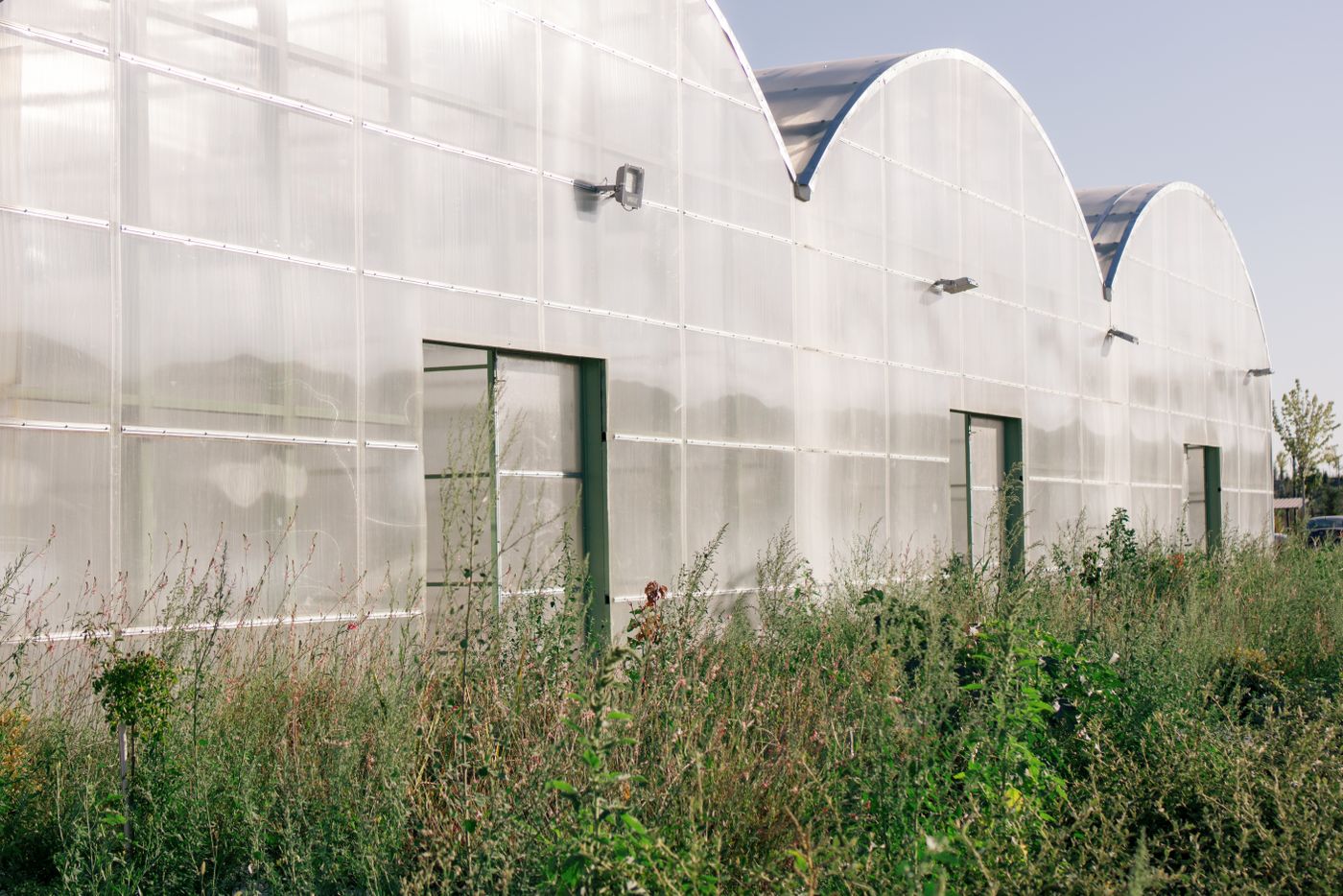
Twin-wall polycarbonate glazing runs from 4mm to 16mm, and every extra millimeter buys real insulation at a real cost in weight, price, and a little light. Manufacturer sheet specs put 4mm around R-1.5 and 82-85% light transmission; 10mm lands near R-1.9 to R-2.7 and 82% transmission; 16mm triple-wall reaches R-2.5 to R-2.8 with transmission down to 65-74%. Most hobby greenhouse kits still ship in 4mm or 6mm.
Here’s the problem: almost no greenhouse kit brand publishes an R-value on its own product page. Canopia, Grandio, and Riverstone all state panel thickness in millimeters, then stop. R-value and light transmission are properties of the raw polycarbonate sheet, and that number comes from the companies that extrude the material, not the companies that bend it into a kit. This page puts both data sets side by side so a thickness spec actually means something before you buy.
What the mm number actually measures
Twin-wall polycarbonate is two flat sheets of polycarbonate fused together with a series of internal ribs running between them, like a tiny cardboard box turned on its side. The “mm” figure on a spec sheet is the total thickness of that structure, outer wall to outer wall, ribs included. It is not the thickness of either individual wall.
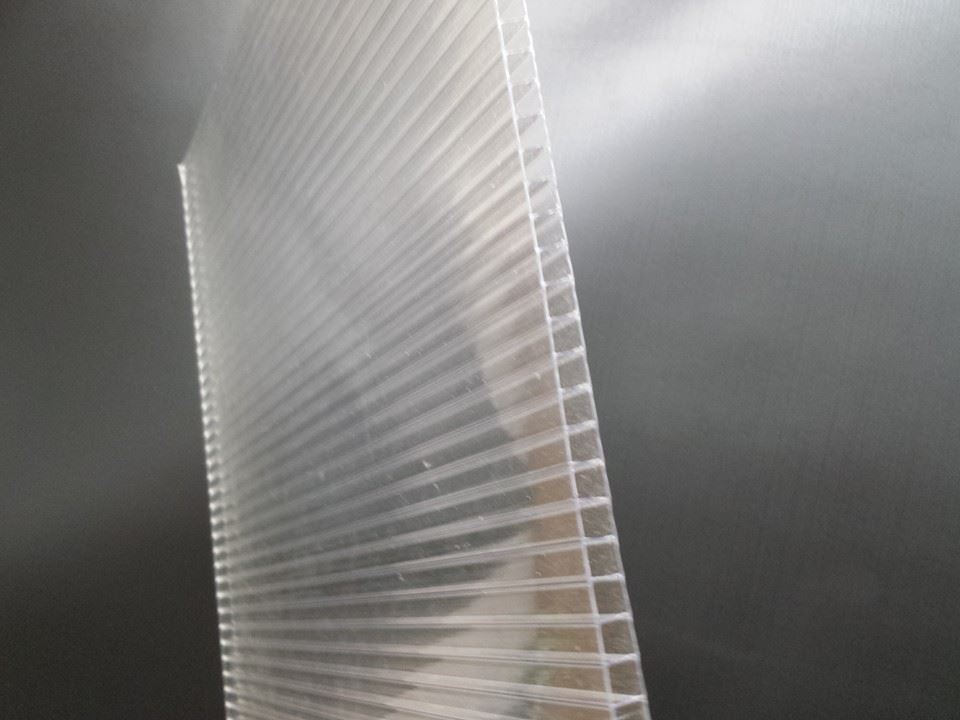
That trapped-air structure is also why polycarbonate insulates so much better than a single flat pane of the same material. Corrugated single-wall polycarbonate (the corrugated roofing panel sold at any hardware store) has no air gap and performs close to plain acrylic. Twin-wall, triple-wall, and the rarer five-wall constructions all add sealed air chambers, and each additional chamber is what raises the R-value.
The comparison table: R-value and light transmission by thickness
These figures come from three polycarbonate sheet manufacturers and distributors: Gallina USA (PoliCarb), Palram’s own SUNPAL technical sheet, and Polycarbonate Store’s published reference table, all fetched directly in July 2026. None of the greenhouse kit brands in the second table below publish R-value or light transmission themselves, which is exactly why this table exists: it is the raw material data that sits underneath every kit spec sheet.
The spread between sources for the same nominal thickness is real, not a rounding error. Palram’s own SUNPAL architectural sheet consistently tests higher than the PoliCarb and Polycarbonate Store figures for 8mm and 10mm, likely reflecting a different internal rib geometry or a heavier-duty commercial construction than the panels bent into a $600 hobby kit. Present the range, not a single invented number.
| Thickness | Structure | R-value (range across sources) | Light transmission, clear (%) | Typical use |
|---|---|---|---|---|
| 4mm | Twin-wall, 2 layers | R-1.47 | 85% | Entry-level hobby kits, mild-climate season extension |
| 6mm | Twin-wall, 2 layers | R-1.6 to R-1.64 | 80% | Mid-tier hobby kits, moderate climates |
| 8mm | Twin-wall, 2 layers | R-1.7 to R-2.3 | 81% | Premium hobby kits, commercial-grade panels |
| 10mm | Twin-wall, 2-3 layers | R-1.9 to R-2.7 | 82% | Cold-climate hobby kits, four-season growing |
| 16mm | Triple-wall, 3 layers | R-2.5 to R-2.78 | 65-74% | Snow-country kits, maximum insulation |
Sources: Gallina USA PoliCarb spec sheet (4mm R-1.47/85%, 6mm R-1.64/80%, 8mm R-1.72/81%, 10mm R-1.92/82%, 16mm R-2.78/65%, verified July 2026); Polycarbonate Store insulation reference table (6mm R-1.6/80%, 8mm R-1.7/81%, 10mm R-1.9/82%, 16mm triple-wall R-2.5/74%, verified July 2026); Palram SUNPAL technical sheet (8mm R-2.3, 10mm R-2.7, U-values 0.43 and 0.37 BTU per hour per square foot per degree F respectively, verified July 2026).
Read the transmission column carefully. Every source agrees that clear 4mm through 10mm twin-wall sits in a tight band, 80 to 85 percent, essentially the same light budget regardless of thickness. The real transmission drop happens at 16mm triple-wall, where a third wall and extra ribs knock five to fifteen points off transmission depending on source. That is the actual trade-off buried in “go thicker for winter”: you are not giving up much light moving from 4mm to 10mm, but 16mm costs you something real.
Does thicker polycarbonate reduce light too much for plants?
Not in the range most buyers are actually choosing between. Going from 4mm to 10mm twin-wall costs roughly 3 percentage points of light transmission across the sources above, a difference no grower would notice by eye and not enough to slow germination or fruiting in any documented way. The meaningful transmission loss is specific to 16mm triple-wall, where the third internal wall and its ribs can cut clear-panel transmission by 8 to 20 points depending on the manufacturer’s construction.
For most crops that still isn’t disqualifying. Leafy greens, herbs, and seedlings tolerate diffused light better than they tolerate direct scorching sun, and a 65-74% transmission figure on a 16mm panel is still plenty of light to grow through a winter in snow country. Where it matters more is fruiting crops in the shortest days of the year, when every percentage point of transmission counts toward ripening. If you’re in that situation and considering a 16mm kit, expect to lean harder on supplemental lighting from November through January than you would with a 10mm structure.
Which kit uses which thickness
Greenhouse kit brands publish panel thickness prominently and R-value almost never. Here is what each brand’s own product pages confirm, verified directly in July 2026.
| Brand and model | Panel thickness | Structure | Verified from |
|---|---|---|---|
| Canopia Hybrid | 4mm roof, single-wall clear walls | Twin-wall roof, single-wall sides | canopia.com |
| Grandio Ascent | 6mm | Twin-wall | grandiogreenhouses.com |
| Riverstone MONT (Monticello) | 8mm | Twin-wall | Authorized Riverstone dealer, mygreenhousestore.com |
| Exaco Riga (2s through 5) | 8mm side walls, 10mm gable ends | Twin-wall | exaco.com |
| Canopia Glory | 10mm throughout | Twin-wall | canopia.com |
| Grandio Elite | 10mm | Twin-wall | grandiogreenhouses.com |
| Exaco Riga XL | 16mm | Triple-wall | Authorized Exaco dealers (greenhousemegastore.com, Tractor Supply); Exaco’s own Riga XL page blocked direct verification |
The Canopia Hybrid entry is worth a second look: only the roof is twin-wall. The side walls are single-wall clear polycarbonate, which is why Canopia states over 90% light transmission on those panels specifically, well above anything twin-wall achieves at any thickness. That’s a deliberate design choice covered in more depth in the Palram Canopia Hybrid review: put the insulating panel where heat escapes fastest (the roof), and take the light-transmission win where it matters most for winter seedlings (the walls). It also means the Hybrid’s overall insulation is lower than its 4mm roof number alone would suggest, since bare single-wall sheet has close to no air-gap insulation at all.
Stepping up from the Hybrid to the Canopia Glory means going from 4mm twin-wall roof and single-wall walls to 10mm twin-wall on every panel, roof and walls both. That is the actual reason the Glory costs roughly double: it isn’t just a bigger footprint, it’s 10mm glazing on every surface instead of a mixed 4mm/single-wall setup.
What’s the difference between 6mm and 8mm polycarbonate?
Roughly a tenth of an R-value point on paper (R-1.6 vs. R-1.7 to R-2.3 depending on source) and, in practice, whichever brand happens to use each thickness. Grandio’s Ascent uses 6mm and its Elite uses 10mm, skipping 8mm entirely. Riverstone’s Monticello line and the standard Exaco Riga both use 8mm for the walls. There is no consistent “6mm tier” or “8mm tier” across brands the way there is a rough consensus that 16mm is the top of the residential kit market.
The more useful way to think about the 6mm-vs-8mm question is less about the raw thermal number, which barely moves, and more about which brand and structural package that thickness comes attached to. An 8mm Riverstone Monticello and a 6mm Grandio Ascent are close enough in glazing performance that the deciding factors are frame material, warranty terms, and price, not the two millimeters of polycarbonate between them.
What R-value do I need for winter growing?
There’s no single answer, because R-value on the glazing is only one input into whether a structure holds temperature through a winter night; frame tightness, foundation seal, and supplemental heat all matter as much or more. But as a floor: for genuine four-season growing in a zone-5-or-colder climate, the 10mm-to-16mm range is where the insulation gain becomes meaningful rather than marginal, which is why Exaco reserves 16mm triple-wall for its dedicated cold-climate Riga XL rather than the 8mm/10mm glazing on its standard Riga line.
For season extension rather than true winter production, the 4mm-to-6mm range on a well-sealed frame, paired with a heater sized correctly for the structure, does real work without the added cost and weight of thicker glazing. The greenhouse heating guide runs the BTU math by structure size and climate zone if you want to size a heater against whatever glazing thickness you land on, and the snow and wind load guide covers the structural rating side of the same cold-climate decision, since a 16mm panel on a frame rated for only 15 lb/ft² of snow doesn’t actually get you a winter-ready structure.
Does thicker polycarbonate really matter for insulation?
Yes, and the manufacturers that publish thickness-comparison content agree it’s not marginal. Grandio’s own comparison of its panel lineup claims moving from 4mm to 10mm can cut heating costs by up to 40% in cold-climate regions, with payback in two to three growing seasons against the higher upfront kit price. That is Grandio’s own marketing claim rather than an independently audited figure, but it lines up with the physics: the R-value tables above show roughly a 30 to 80 percent jump in insulating value moving from 4mm to 10mm depending on which manufacturer’s numbers you use, and heating cost tracks R-value directly once the structure’s other variables (foundation, frame seal, heater efficiency) are held constant.
The honest caveat is that the payback math depends entirely on how cold your winters actually get and how many months a year you’re paying to heat the structure. A grower in Zone 7 running a heater for six weeks a year won’t see the same payback curve as a Zone 4 grower heating from October through April. Run your own numbers against the heating guide before assuming a thicker panel pays for itself on your specific site.

UV protection and coatings: what “100% UV blocked” actually means
Every brand in the comparison table above markets its polycarbonate as fully UV-protected, and the underlying material science backs that up: polycarbonate itself blocks close to 100% of UV-A and UV-B radiation, which is why it doesn’t need a separate UV film the way some plastics do. What varies by manufacturer is how the UV-resistant layer is applied. Palram’s own SUNPAL documentation states UV protection is typically co-extruded onto one side of a panel as standard, with two-sided protection available on select product lines. Canopia’s consumer greenhouse kits (Hybrid, Glory) are marketed as “100% UV protected” without publishing which side or sides carry the coating.
The side that matters is whichever one faces outdoors. A panel installed backwards, UV coating facing the greenhouse interior instead of the sun, will yellow and become brittle years ahead of its rated life, because the unprotected side is the one taking the UV load. Kit instructions mark the UV-treated side (usually a printed film or sticker on that face during shipping); check for it during assembly rather than assuming symmetry.
Panel warranties track this UV performance claim directly. Exaco states its polycarbonate is manufactured with UV protection but does not publish a specific warranty term on the material itself; Riverstone backs its Monticello polycarbonate with a 10-year warranty matching its frame warranty; Grandio’s product pages are inconsistent about the exact figure (10 years per its FAQ text, 15 years elsewhere on the same page), which is worth confirming directly with Grandio before purchase rather than trusting either number blind. None of that inconsistency changes the underlying material claim. It just means the warranty paperwork deserves the same skepticism as the R-value marketing copy.
Replacing or repairing a panel
Twin-wall polycarbonate panels do eventually need replacing, usually from UV-side degradation, hail impact, or a cracked corner from age and thermal cycling rather than catastrophic failure. A few things make that job easier and keep the rest of the glazing performing at spec while you’re in there.
- Twin-wall polycarbonate replacement panels, 6mm: pre-cut clear twin-wall stock for patching a damaged panel without ordering direct from the kit manufacturer.
- Stainless steel greenhouse glazing clips: re-secure a panel that has worked loose in its channel from years of thermal expansion and contraction, the most common reason a panel starts rattling before it actually fails.
- NOVUS Plastic Clean & Shine #1: a polycarbonate-safe cleaner. Ammonia-based glass cleaners (Windex and similar) strip the UV coating and haze the surface; a dedicated plastic cleaner doesn’t.
For the film-covered alternative to rigid polycarbonate panels, mil thickness and UV life work on a completely different scale; the greenhouse plastic guide covers polyethylene film glazing on its own terms. And if the structure holding whatever glazing you choose isn’t rated for your local snow load, the thickest panel in this comparison won’t save you; check the snow and wind load guide before the glazing decision, not after.
As an Amazon Associate, Defy Frost earns from qualifying purchases.