Field guide Guides 9 min
Greenhouse Snow and Wind Loads: What the Ratings Mean
The math behind greenhouse snow load ratings and wind specs, with a verified kit-by-kit comparison and a guide to matching specs to your climate zone.
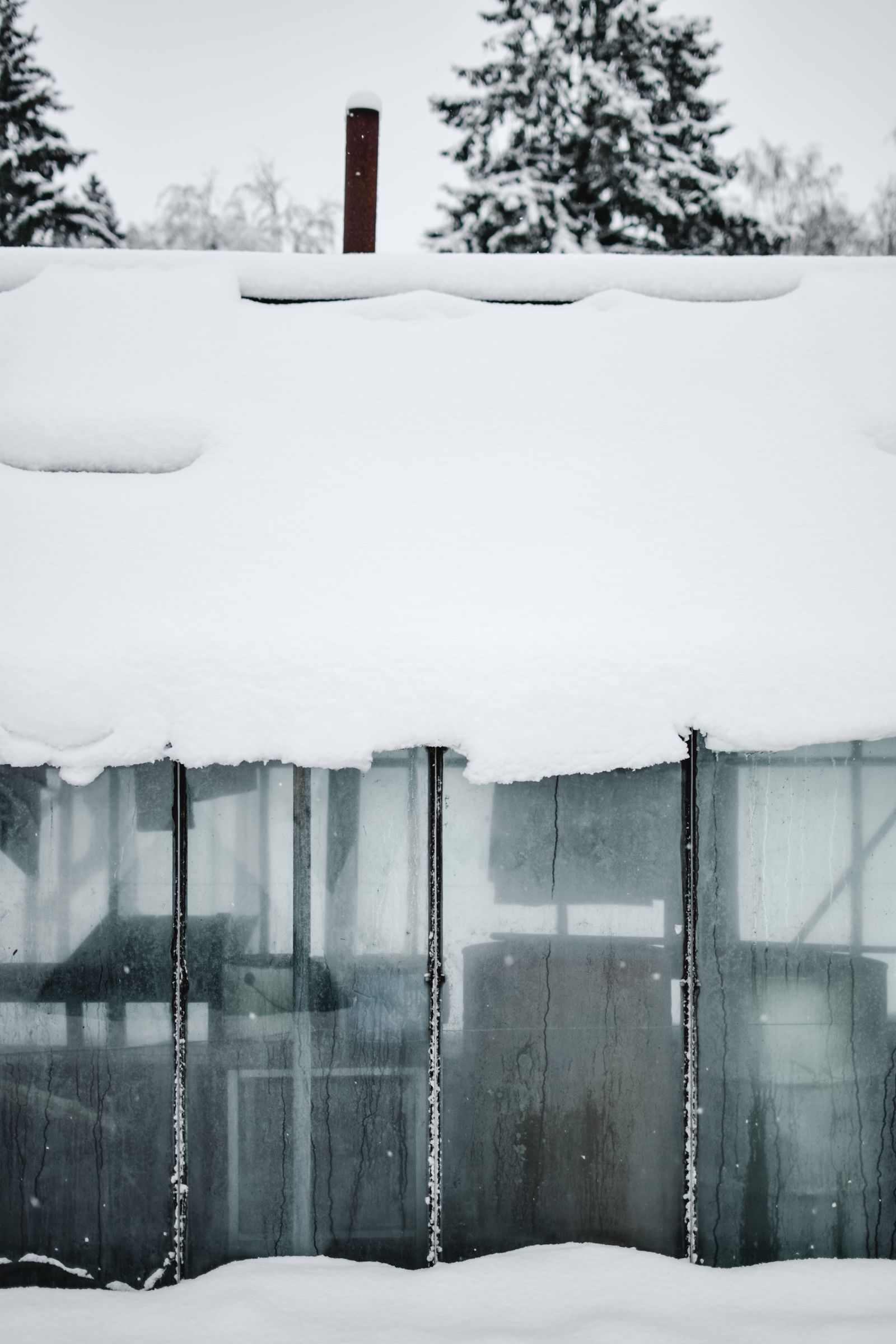
Greenhouse snow load ratings measure how much accumulated snow weight a structure is engineered to carry, in pounds per square foot. Published ratings among residential kit greenhouses run 15 to 30 lb/ft². Look up your county’s ground snow load on the ASCE 7 map, then buy a kit rated at least 25 percent above that figure.
Wind ratings follow the same logic: a manufacturer-published mph figure states the peak gust speed the structure was tested or engineered to withstand. A kit rated for 56 mph is underspecified for the majority of the lower 48, where ASCE 7 design wind speeds typically run 85 to 115 mph.
What Pounds per Square Foot Actually Means
Snow load is a structural engineering concept borrowed from building codes. The “ground snow load” for your location is a published figure, mapped by the American Society of Civil Engineers in ASCE 7, that represents the weight per square foot of snow that accumulates on flat ground over a 50-year return period. For a greenhouse roof, the actual load is lower than the ground figure because sloped roofs shed snow. Engineers apply a conversion factor, typically 0.7 times the ground snow load, to arrive at the “roof snow load” used in structural design.
In practical terms, a site with a 30 lb/ft² ASCE 7 ground snow load has a design roof snow load of roughly 21 lb/ft². A Canopia Hybrid rated for 15 lb/ft² offers no margin at that site. A Grandio Elite rated for 25 lb/ft² has 4 lb/ft² of headroom, which is meaningful but still slim. An Exaco Riga XL at 30 lb/ft² has comfortable margin.
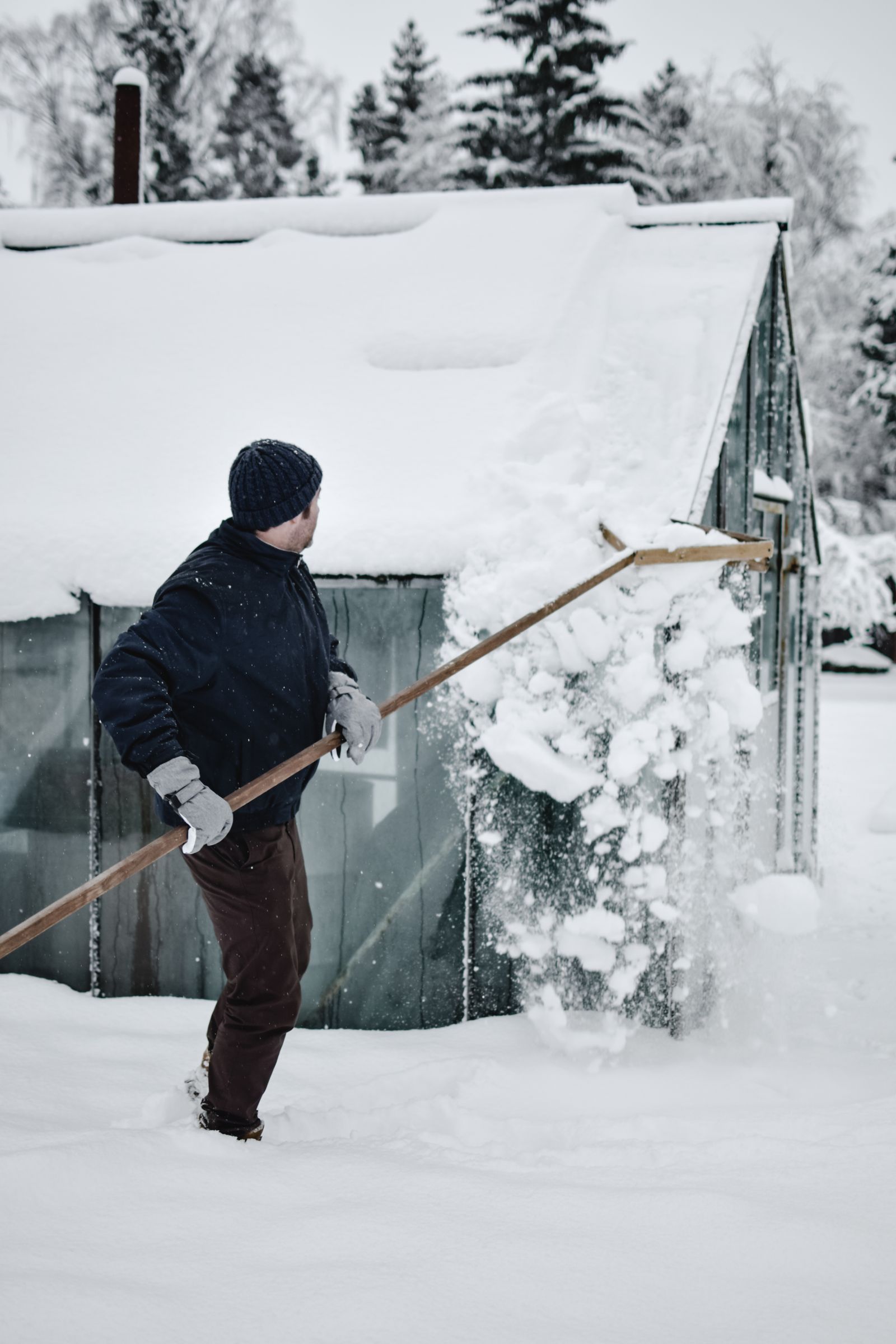
Converting to real snow: Fresh dry powder runs 3 to 7 pounds per cubic foot, or roughly 0.25 to 0.6 lb/ft² for every inch of depth on the roof. To hit 15 lb/ft², you need anywhere from about 25 inches of dry powder at the dense end of that range to nearly 60 inches at the light end, without any settling. Wet spring snow is a different story. Dense, saturated snow runs 15 to 20 lbs per cubic foot, or 1.25 to 1.65 lb/ft² per inch. Twelve inches of wet snow deposits 15 to 20 lb/ft², which equals or exceeds the Canopia Hybrid’s entire rated capacity in a single storm. Ice formation adds even more: a half-inch of ice can add 2 to 3 lb/ft².
The takeaway is that the damage event is almost never a long winter of gradual accumulation. It is one heavy, wet storm in late February or March, combined with overnight freezing that locks the load to the frame before you can clear it.
Residential Kit Ratings Compared
These ratings are verified from manufacturer websites in June 2026. “Not published” means the figure does not appear on the manufacturer’s product pages or structural specification documents.
| Greenhouse | Snow load | Wind rating | Source |
|---|---|---|---|
| Exaco Riga XL | 30 lb/ft² | 120+ mph | exaco.com |
| Grandio Elite | 25 lb/ft² | 76 mph | grandiogreenhouses.com |
| Grandio Ascent | 25 lb/ft² | 76 mph | grandiogreenhouses.com |
| Exaco Riga (non-XL) | 20+ lb/ft² | 120+ mph | exaco.com |
| Canopia Hybrid | 15 lb/ft² | 56 mph | canopia.com |
| Canopia Glory | Not published | Not published | canopia.com |
| Canopia Grand Gardener | Not published | Not published | canopia.com |
| Solexx (all models) | Not published | Not published | solexx.com |
Two observations from that table.
First, Exaco’s Riga trades the highest snow rating in the segment (30 lb/ft² on the XL) for a premium price and a narrower, taller frame profile. The 120-plus mph wind rating is in a class by itself. For snow-country buyers, the Riga XL is the structural choice among residential kits. The Exaco Riga review covers the full spec and how the onion-arch frame distributes load differently from a flat-panel kit.
Second, Canopia does not publish snow load or wind ratings for its Glory or Grand Gardener series. These are polycarbonate kit greenhouses sold through major retailers. The absence of published structural ratings does not mean they are unrated, but it does mean the buyer cannot evaluate them on structural merit without contacting Canopia directly or finding third-party documentation. For a purchase decision based on structural performance, an unverifiable rating is the same as no rating.
The Canopia Hybrid’s published ratings (15 lb/ft², 56 mph) make it viable for mild-climate, season-extension use. At 15 lb/ft², it belongs in USDA Zone 7 and warmer, where ground snow loads typically run below 10 lb/ft². The Palram Canopia Hybrid review covers the value case for that use scenario. The Grandio Elite review covers the case for stepping up to 25 lb/ft² in frost-belt climates.
Wind Ratings: What mph Means
Wind speed ratings on greenhouse kits are almost always 3-second gust figures, not sustained wind speeds. A 3-second gust is the peak velocity over a 3-second period, which is what causes structural loading. Sustained speeds are lower. When a kit claims “rated for 76 mph,” that refers to the peak gust load the frame was designed to resist.
ASCE 7 publishes design wind speed maps by zip code. For most suburban residential sites in the lower 48, the basic design speed runs 85 to 115 mph. Coastal areas are higher: Gulf Coast and Atlantic hurricane exposure zones go to 130 to 170 mph. The Mountain West and Great Plains run 90 to 110 mph. The Pacific Northwest varies widely but is often 85 to 100 mph away from the coast.
At 56 mph, the Canopia Hybrid’s wind rating sits below the ASCE 7 design speed for most US locations. The structure can still be used safely, but it relies on proper anchoring and site selection rather than frame-level structural margin. Placing it in a wind-sheltered location, anchoring the base kit securely to a foundation with auger ground anchors, and not positioning it in an exposed field significantly reduces the practical risk. The greenhouse foundation guide covers anchoring options.
At 76 mph, Grandio’s rating covers most non-coastal, non-mountainous residential sites with modest margin. At 120-plus mph, the Exaco Riga’s rating exceeds the design speed for nearly every residential site in the lower 48.

How to Find Your Local Requirements
Ground snow load (ASCE 7): The authoritative source is the ASCE 7 standard, which publishes ground snow load maps by county and sub-region. Your local building department will have this figure for your zip code. It is also cited in permit applications for any permanent structure. For greenhouses that do not require permits (most residential kit greenhouses at residential scale), the county building department can tell you the figure for your area without requiring you to pull a permit.
Wind speed (ASCE 7): The same standard maps design wind speed. Most online sources that reference ASCE 7 wind maps are reliable because the underlying data is published by the standard body and doesn’t change frequently.
What to do with the numbers: Take the ground snow load figure for your county, multiply by 0.7 to get the approximate design roof snow load, then add a 25 percent safety buffer. For example, if your county’s ground snow load is 25 lb/ft²: 25 × 0.7 = 17.5 lb/ft² design roof load. With a 25 percent buffer: 17.5 × 1.25 = 21.9 lb/ft². A kit rated at 25 lb/ft² has adequate margin for that site. A kit rated at 15 lb/ft² does not.
The 0.7 multiplier and 25 percent buffer are conservative rules of thumb, not engineering calculations. For a hobby greenhouse in most residential settings, this math produces a reasonable buying filter. If the structure is near a ridge, in a wind tunnel between buildings, or in a documented heavy snow zone, consult a local structural engineer before relying on these rules of thumb.
Matching Kit to Climate Zone
A quick reference by USDA hardiness zone, which correlates roughly with winter severity. Ground snow loads are regional within zones, so treat these as starting points.
Zone 3 to 4 (Minnesota, northern Michigan, Montana): Ground snow loads commonly run 40 to 70 lb/ft². The Exaco Riga XL (30 lb/ft²) is the only residential kit in the comparison table with structural ratings that approach these levels. Rigid greenhouse kit use in Zone 3 to 4 with heavy snowpack often requires active snow management regardless of rated load.
Zone 5 to 6 (Illinois, Indiana, Connecticut, western Oregon): Ground snow loads typically run 15 to 40 lb/ft². Grandio’s 25 lb/ft² rating is viable for the lower end of this range with regular snow clearing. The Exaco Riga XL has broader margin. The Canopia Hybrid’s 15 lb/ft² is marginal for most Zone 5 sites.
Zone 7 and warmer (Virginia, Tennessee, Pacific lowlands): Ground snow loads typically run 0 to 15 lb/ft². The Canopia Hybrid’s 15 lb/ft² rating is adequate, and the low structural bar opens the door to lower-cost options. Season extension rather than four-season growing is the typical goal in these zones. The cheap greenhouse heating guide covers heating economics by zone.
Zone 8 and warmer (Pacific coast lowlands, Deep South): Snow loads near zero. Wind exposure (especially coastal) is the primary structural concern. The Canopia Hybrid’s 56 mph wind rating may still be inadequate in Gulf Coast and Atlantic exposure zones where design wind speeds exceed 130 mph.
When Ratings Are Not Published
The Canopia Glory and Grand Gardener, and all Solexx models, do not publish snow or wind load ratings on their manufacturer sites as of June 2026.
That absence does not disqualify these products. It means you cannot evaluate them on structural merit from the spec sheet. Contact the manufacturer directly and ask for the structural load documentation before purchasing for a cold-climate application. If the answer is “we don’t publish that,” factor the uncertainty into your decision. A kit you cannot evaluate structurally is a kit you are trusting on something other than verified specs.
What Snow and Wind Ratings Do Not Tell You
A rating applies to the frame and standard glazing connections when the kit is assembled correctly on a proper, level, anchored foundation. It does not account for:
- Panels loosened by repeated thermal expansion/contraction over years
- Door and vent frame gaps from inadequate anchoring or foundation settling
- Snow that melts, refreezes, and forms a concentrated ice load along the eave rather than distributing evenly
- Wind pressure concentrated by nearby buildings, topography, or tree lines
For the glazing-type comparison that affects how panels handle thermal stress and UV degradation over time, the polycarbonate glazing guide covers twin-wall polycarbonate by thickness with primary sources, and the greenhouse plastic guide covers PE film.
For snow country buyers, the summary is straightforward: get the rated number, compare it to your county’s ground snow load, build in headroom, anchor correctly, and plan to manage heavy accumulations manually regardless of what the spec sheet says. No residential kit greenhouse is designed to go all winter without attention during heavy snow events.
Accessories worth buying on day one
The rated frame is only half the picture; a few items address the connections and the load the spec sheet does not manage for you.
- Stainless steel greenhouse panel clips: re-secure polycarbonate panels loosened by years of thermal expansion before one pops out under snow or wind load.
- AcuRite indoor/outdoor digital thermometer: tracks the freeze-thaw cycles that turn distributed snow into a concentrated ice load along the eave.
- Agribon AG-19 floating row cover: protects the crop on the coldest nights while you keep the roof cleared during a heavy accumulation event.
As an Amazon Associate, Defy Frost earns from qualifying purchases.